

International Delivery
We deliver your order internationally

Satisfied or Refunded
You have 14 days to change your mind at Mon Qamis Homme

Secure Payment
Pay your order with Paypal, CB, Visa, Mastercard
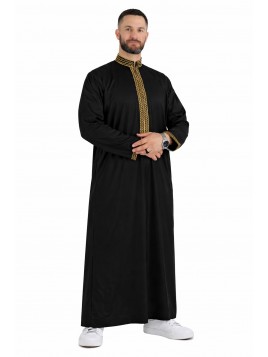


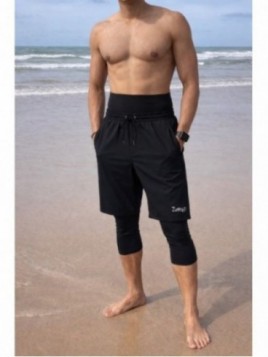


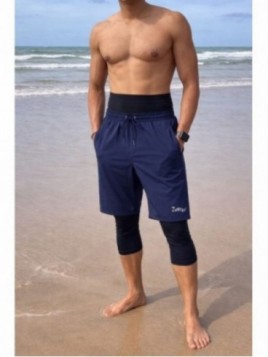
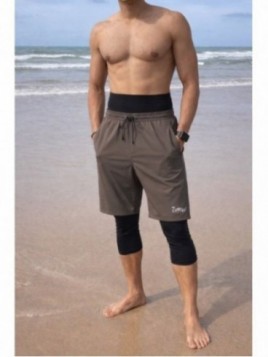
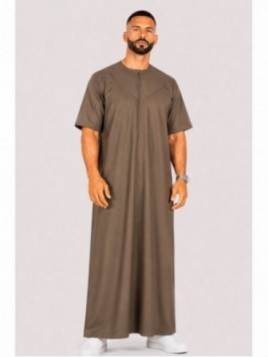
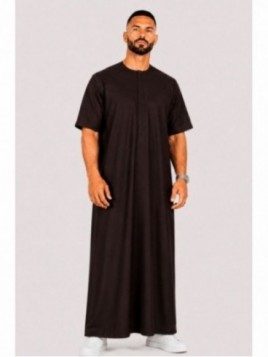
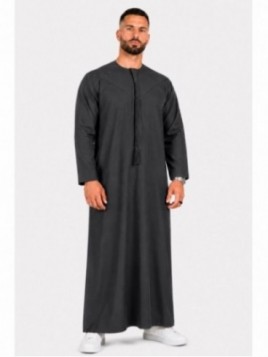
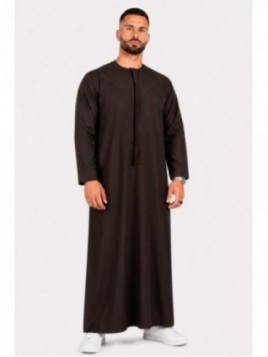
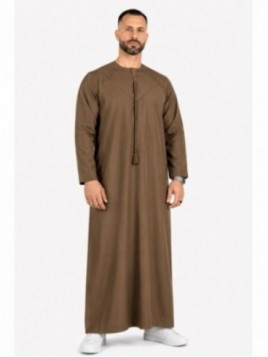
Who said that elegance, refinement, but also modesty, was only for women? Certainly not your store Mon Qamis Homme in any case! We have, indeed, taken care to share with you many models of men's abayas, in order to revive a Sunnah.
Because yes, this Islamic garment has a real symbolism in the Muslim religion. Therefore, we offer you the opportunity to remake your wardrobe.
And this, at small prices, as well as taking advantage of many models and brands. All this, gathered on a single platform, in order to facilitate your task! Isn't life beautiful? Have a nice shopping at Mon Qamis Homme !
The Qamis: the masterpiece of the Muslim man!
Which Muslim, at the time of today, does not have at least one thobe in its cupboard! If you are part of these exceptions, then, remedy quickly to that!
Indeed, this Muslim dress is a must, and must be worn with pride. But before going into details, let's talk more about this unique piece. Characterized by a long cut stopping above the ankles, the kameez can be worn differently depending on the country and customs. However, a few basic rules generally remain. For example:
- It is only worn by men, and looks nothing like women's clothing;
- The color white is the most common and the most popular. Indeed, the Prophet ('alayhi salat wa salam) said, "Wear white clothes, for they are the best, and use them as a shroud." (Abû Dâwûd, al-Tirmidhî, al-Nasâ'î, ibn Mâdja, Ahmad)
- This Arabian tunic covers the 'awra of the man, i.e. the parts of his body to be hidden from others;
- It is not a transparent garment that reveals areas to be hidden;
- It is never made of silk or gold, in order to respect the Prophetic rule on this matter. 'Alî, may Allah be pleased with him, reported: "The Prophet ('alayhi salat wa salam) took silk in his right hand and gold in his left and said: 'These two things are forbidden to the men of my community (Abû Dâwûd, al-Nasâ'î, Ahmad)
- The kameez is the garment of the Muslims par excellence, and does not resemble in any way the garments of the non-Muslims.
Back to the origins of the male Qamis
The thobe is a noble Islamic garment, worn differently in the four corners of the country. Moreover, it is given several names depending on its location:
- Boubou, in black Africa
- Jellaba, gandoura or jebba in Maghreb
- Thawb, in the Gulf countries
However, this noble man abaya has one and the same origin: the prophetic tradition, or also called Sunnah. Therefore, every Muslim concerned with applying his religion and taking example on the best of the men who existed, likes to wear this Islamic dress.
The different models of kameez: between modernity and tradition
At Mon Qamis Hommewe work hand in hand with the best suppliers in their field. That is to say that the cuts and materials are carefully selected, according to precise quality criteria. Moreover, so that you have the choice to dress as you want, our department of Muslim men's ready-to-wear is well supplied!
The Emirati model:
This is the traditional garment worn in the Emirates. You can even match it with your children if you wish, as with the beige satin Emirati thobe. The Saudi This Arabian kameez has class to spare! Its distinguished cut will give you a great presence. The short thobe Also called Pakistani thobe, it can be made of one piece, with a short tunic. Or two pieces, either a tunic and matching pants.
The jubba:
The jabador and the gandoura are the traditional clothes of the Maghrebians. Mastour and sporting a very oriental style, these Islamic outfits are very pretty to wear on a daily basis!
The brands:
We also work with various famous brands. Among them :
- Qabail: the jogging style of the kameez Trial anthracite hood will reconcile you with this garment!
- Atlas and Ikaf: the quality-price ratio of the Atlas satin burgundy model will not let you down.
Finally, you should know that we also have a great choice for children! Find the nice beige satin model for kids/teens with its short sleeves, which will make the happiness of your little muslims!
How to wear this prophetic garment?
This question may seem to hide a simple and logical answer. How to wear this tunic for men? Well, simply by putting it on, you will say to me!
But, let us go further in our reflection. The kameez is not similar to any other garment. It is therefore important to wear it with pride, and to revive with, some sounnan neglected, see forgotten, what do you say? In fact, it is a true prophetic tradition that you expose to the eyes of all. So, let's adopt the behavior that goes with it, first of all. Then, let's try to adorn ourselves as best we can!
The kufi:
The headgear that will make you wear the Sunnah from head to toe!
The siwak:
The essential item, both for your teeth, and to practice a neglected worship.
Slippers:
This leather shoe will perfect your style, with a nice retro twist.
The keffiyeh:
The one also called shemagh is very commonly worn in the Middle East. This scarf is an ornament that dresses the Muslim man with a lot of class.
Perfume:
Some might wonder what perfume is doing amidst all these accessories. Well, you should know that it is also an adornment, and a habit of our beloved Prophet ('alayhi salat wa salam). In fact, good smell and neat appearance are acts appreciated by our Lord. Therefore, do not skimp on the use of perfume and musk when dressing up!
The Prophet ('alayhi salat wa salam) said, "Allah has a right over every Muslim that he wash himself every seven days, and if he has perfume, he must put it on." (Sahih Ibn Khuzaymah 1761) For these reasons, we offer you a choice of popular oriental perfumes, such as Oud Sharqia by Ard al Zaafaran.